In the heart of the Tuscia, among the gentle slopes between Vulci, Lake Bolsena and Orvieto, Podere di Marfisa tells a story rooted in the region’s Etruscan past. Here, winegrowing is not just production, but a form of cultural continuity: a silent dialogue with a civilisation that was among the first to make wine, music and the role of women central elements of social life.
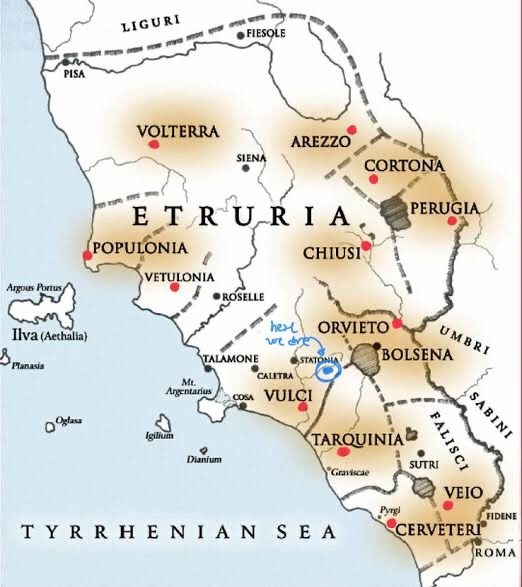
The 12 Etruscan City-States and Podere di Marfisa
Walking among the vine rows of the podere, you can sense the same care for the land that the Etruscans held. For them, growing vines was a sacred act, part of a natural balance to be respected. Today, the philosophy of Podere di Marfisa recovers that harmony, focusing on sustainability and an approach that values the identity of the land over mass production.
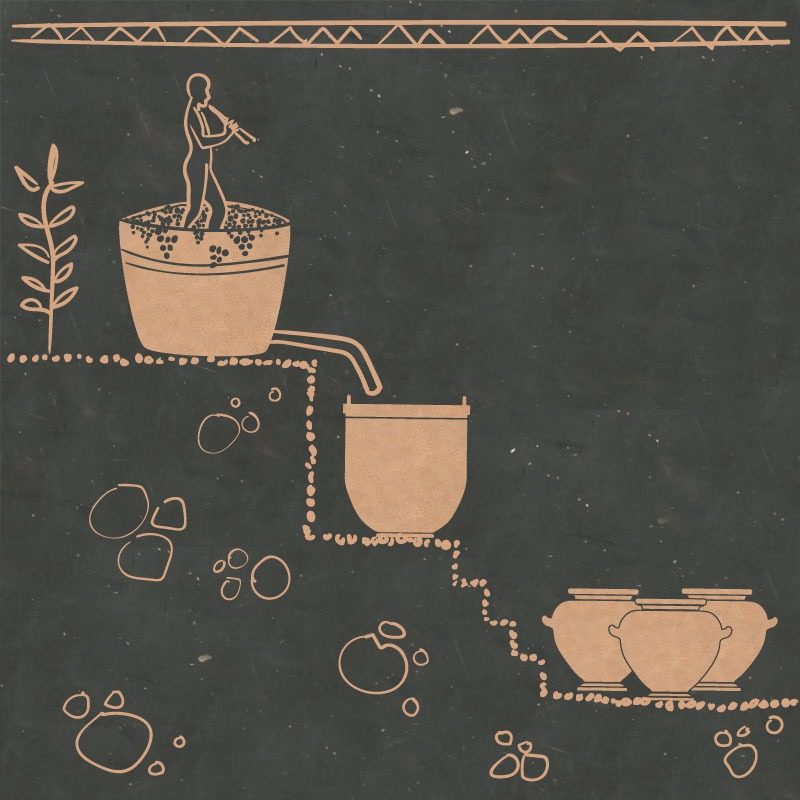
The Etruscans and wine
The Etruscans and wine
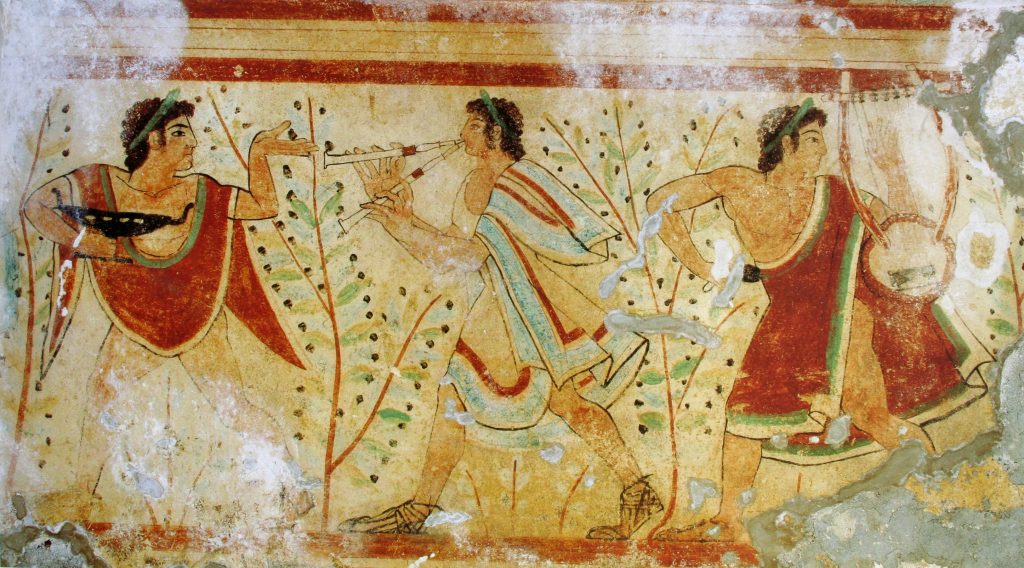
For the Etruscans, wine was much more than a drink. In the painted tombs of Tarquinia and Cerveteri, banquets are accompanied by music and dance: signs of a culture that celebrated life through the senses. In a different but consistent way, Podere di Marfisa hosts events where wine engages in dialogue with music, turning the tasting into a shared experience that brings together sound, taste and landscape.
Dancers and Musicians, Tomba dei Leopardi, Monterozzi (Tarquinia) 5th-century BC fresco — shows dancers and musicians in a convivial setting.
Dancers and Musicians, Tomba dei Leopardi, Monterozzi (Tarquinia) 5th-century BC fresco — shows dancers and musicians in a convivial setting.
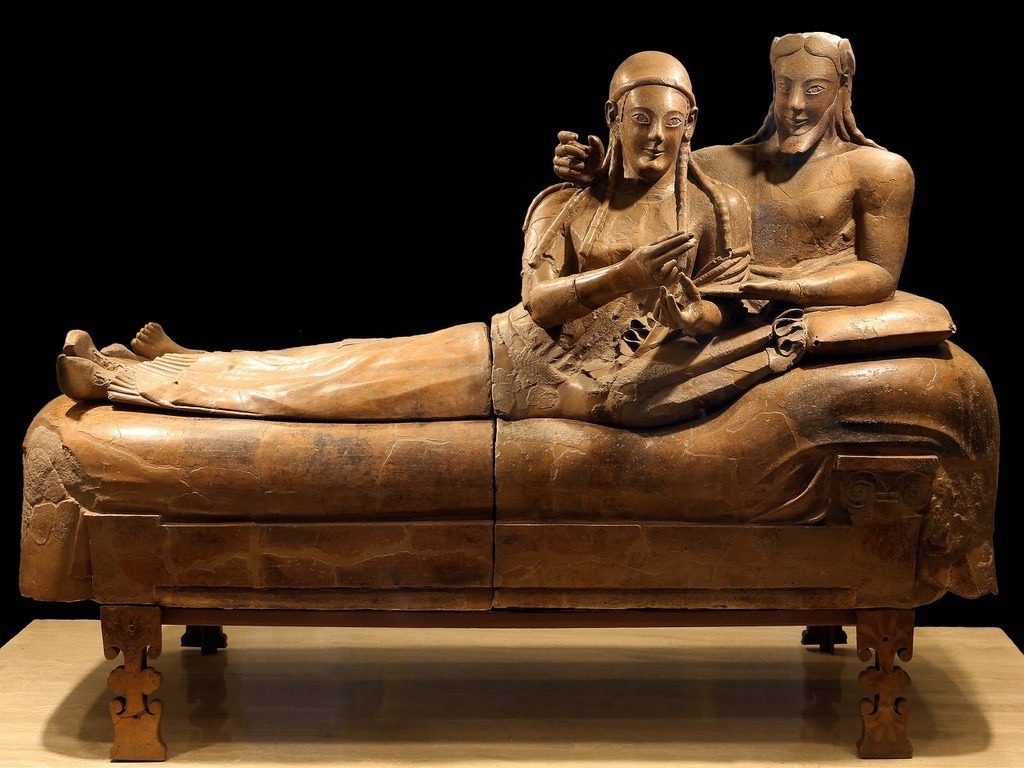
Another significant link to Etruscan civilisation concerns the role of women. Unlike many ancient societies, Etruscan women took part in public life, enjoyed economic independence and attended banquets. Here too, at Podere di Marfisa, the estate’s female leadership carries forward an idea of competence and sensitivity that continues that tradition. The figure of Marfisa thus becomes a symbol of care, vision and quiet strength.
The Sarcophagus of the Spouses
The Sarcophagus of the Spouses
The result is a place where history and the present coexist naturally. Between a glass of wine, a musical note and a landscape that still bears the imprint of an ancient civilisation, Podere di Marfisa gives visitors a sense of continuity with what has been — and with what, still today, makes the Tuscia a distinctive land.